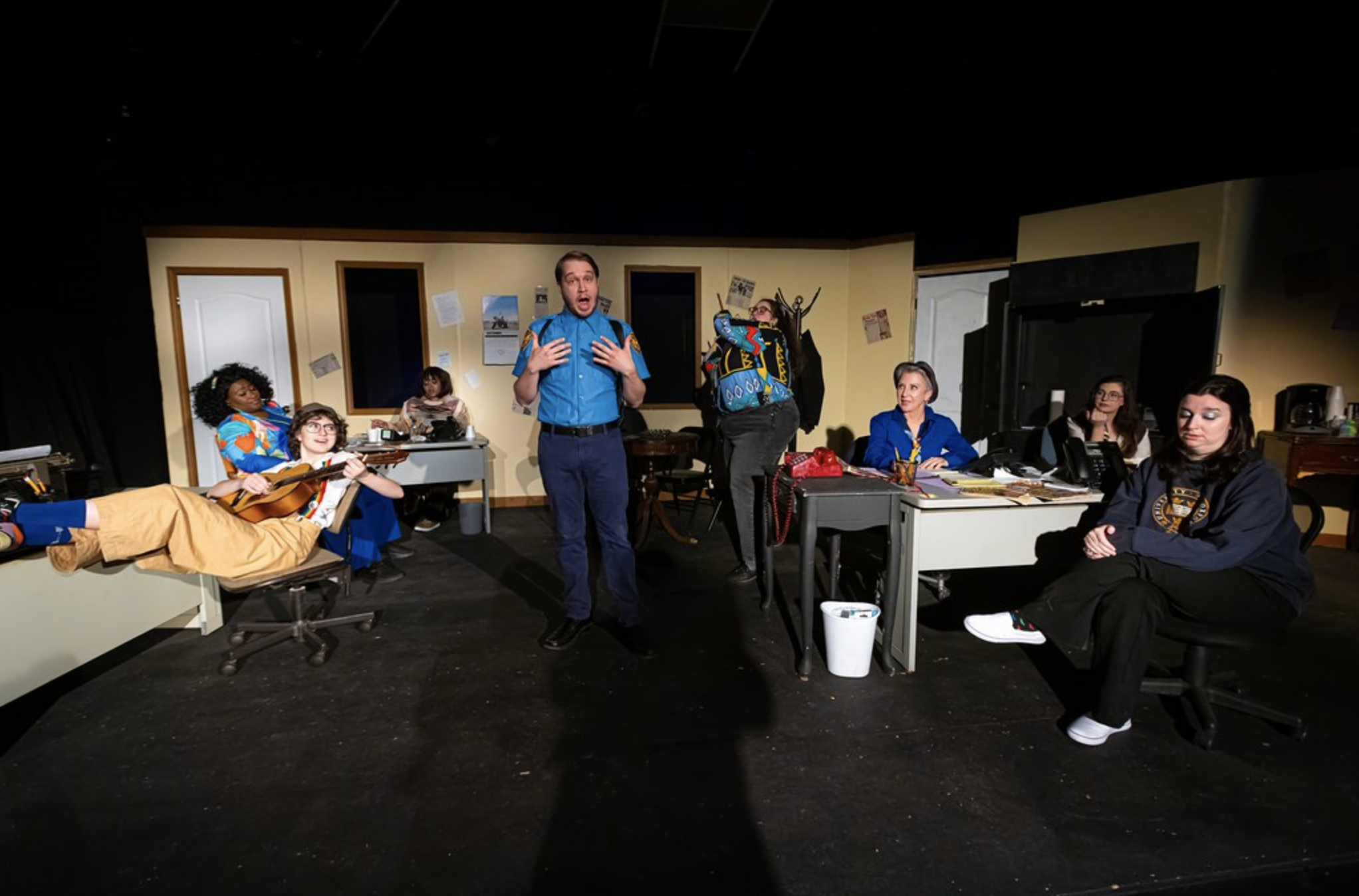
Ben Hecht was an American novelist, playwright, and film writer who, as a newspaperman in the 1920s, perfected a type of human interest sketch that was widely emulated. His play The Front Page (1928), written with Charles MacArthur, influenced the public’s idea of the newspaper world and the newspaperman’s idea of himself. Lively reminiscences of Hecht’s Chicago years are found in his Gaily, Gaily (1963), Letters from Bohemia (1946), and his autobiography, A Child of the Century (1954). He collaborated with MacArthur on another successful stage comedy, Twentieth Century (1923). In Hollywood he wrote scripts, often with MacArthur, for a number of successful motion pictures, among them The Front Page (film version 1931), The Scoundrel (1935), Nothing Sacred (1937), Gunga Din (1938), Wuthering Heights (1939), Spellbound (1945), and Notorious (1946). Hecht also wrote the script for the film Spectre of the Rose (1946). Hecht’s last Broadway success was Ladies and Gentlemen (1939; also with MacArthur).
Charles MacArthur was an American journalist, dramatist, and screenwriter. He was a colourful personality who is remembered for his comedies written with Ben Hecht. MacArthur and Hecht began their long partnership and earned critical acclaim with The Front Page (1928), a farce about a star reporter who is drawn into his own story. MacArthur and Hecht also achieved success with Twentieth Century, a lively satire of the entertainment industry that takes place on an express train between Chicago and New York City. Their other collaborations include Jumbo (1934), Ladies and Gentlemen (produced 1939), and Swan Song (produced 1946). The pair also wrote many successful screenplays in the 1930s, among them Crime Without Passion (1934), The Scoundrel (1935), which won an Academy Award for best original story, Soak the Rich (1936), Gunga Din (1939), and Wuthering Heights (1939). MacArthur’s solo screenplays include The Sin of Madelon Claudet (1931), Rasputin and the Empress (1932), and The Senator Was Indiscreet (1947).